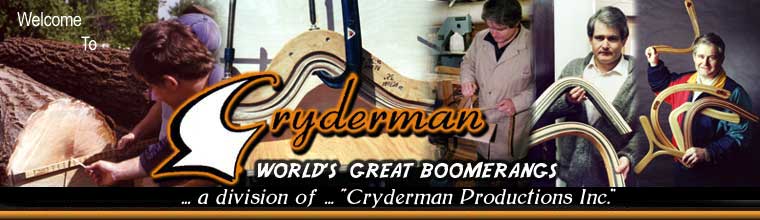
It Keeps Coming Back
When you get a new boomerang, how do you get rid of the old one?
John K. Cryderman, an expert in the boomerang field, has a ready answer. He says "You don't; it's like the revenue department it keeps coming back."
Cryderman, whose home is in Chatham, Ont, was in Saskatoon recently, en route to a woodworking show in Edmonton. He was using the trip west to stir some interest in the gadget he calls "the thinking man's frisbee."; Doctors and lawyers are among the good customers for the boomerangs he manufactures. Now he's trying to interest some younger people as well. He says he's quite willing to accept invitations from schools to conduct workshops and seminars for their students.
He has come a long way since he read a story about boomerangs in a magazine while waiting for attention in a dentist's office in 1978.
Woodworking shows are his major interest and provide an opportunity for him to display his handiwork and to tell the boomerang story.
He says the boomerang is normally associated with the aboriginals of Australia and has become a symbol of that country. In fact, the Australians were the last people to meet up with the "hunting stick."
Kryderman says they were known around the world in Hilly ancient times The earliest recorded boomerang like stick was found in the area where Poland is now some 23,000 years ago. Boomerangs and hunting sticks were also found in the tomb of Tutankhamen.
The hunting stick doesn't normally return. It weighs three to five pounds and is intended to kill the animal that is its target. The boomerang weighs two to 10 ounces and is purely for recreation.
"If you hit a 150-pound kangaroo with a three to five ounce boomerang lie'll just get mad and charge you," Cryderman says.
He had to explain this to Ontario teachers who were hostile about his efforts to interest students in the boomerang. They saw it as a dangerous weapon. Once they realized it was intended only for recreation they were more ready to accept it.
Cryderman's brochure describes more than a dozen types of boomerang. He takes credit for inventing a couple of them but says the others have been developed through the years wherever they are used. The greatest development took place in Europe and Asia. Cryderman uses the old saying "two heads are better than one" to explain this. He says the 3.5 million people who lived in Eurasia in early times were able to produce more ideas about them than could the 3,000 aboriginals from Tasmania who were left in Australia after the ice age.
Cryderman is particularly proud of the pair he made a couple of years ago as a gift for Charles, Prince of Wales. Construction of the world's most expensive boomerangs took more than 400 hours and they are valued at something more than $20.000. (Cryderman will sell you a pair to play with for great deal less than that).
They were made from various rare woods. The elbow sections are inlaid with wheat in gold. depicting Canada as a world leader in grain export and the Royal Family's concern for world famine. The wings show the Prince on horseback representing his competitive spirit on the polo field.
The case is made of solid two-inch walnut and weighs in excess of 80 pounds. The top is inlaid with two solid walnut boomerangs, smaller versions of those inside. Value of the gold and silver and their molds is approximately $7,000.
Cryderman prizes the letter of thanks, bearing the Prince's handwritten signature, he received in February of last year. The letter admits Charles is no expert in throwiing boomerangs and the pair will remain in their box "where they can be admired without risk of damage or injury to innocent bystanders'"